



Product Description
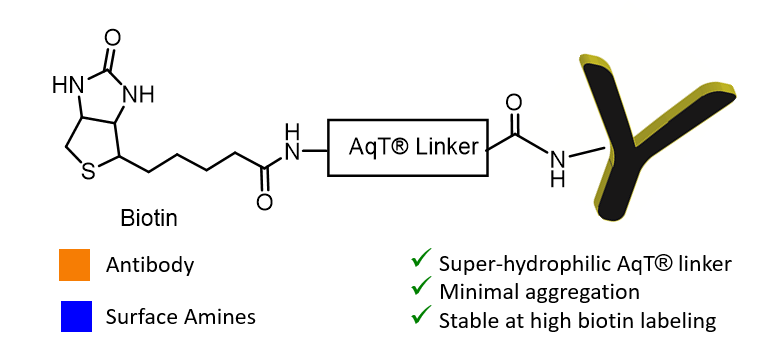
Proprietary surface amine biotinylation kit for antibodies with 6 to 8 biotins per antibody, using CellMosaic's super-hydrophilic AqT linker to minimize or eliminate aggregation.
| Download Documents | |
|---|---|
| SDS | User Manual Supplied with Each Order |
This kit is a second-generation AqT® Biotinylation kit that replaces CM86140 (AqT® Biotin Active Ester Antibody Labeling Kit). It features a more stable formulation, resulting in more consistent and higher biotinylation level.
AqueaTether® (AqT®) linkers are proprietary biomaterials developed at CellMosaic for labeling and conjugating biomolecules with highly hydrophobic small molecules, improving bioconjugate performance in downstream applications. For example, biotin is poorly water-soluble and prone to aggregation; incorporation of the AqT® linker enhances its solubility, enabling labeling with minimal or no organic solvent. The AqT® Biotin Antibody Labeling Kit (Surface Amines) leverages this technology to produce high-quality, low-aggregation conjugates using a super-hydrophilic, water-soluble, charge-neutral AqT® linker that also minimizes non-specific interactions with proteins and surfaces.
For a detailed description of the AqT® technologies, please see our technology section.
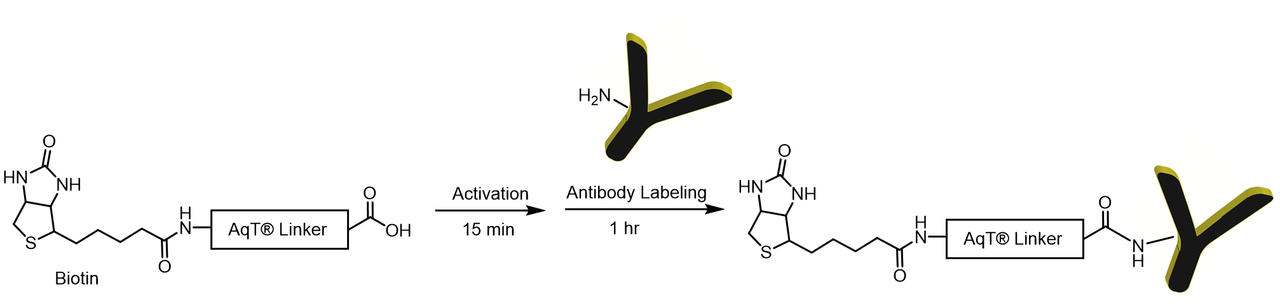
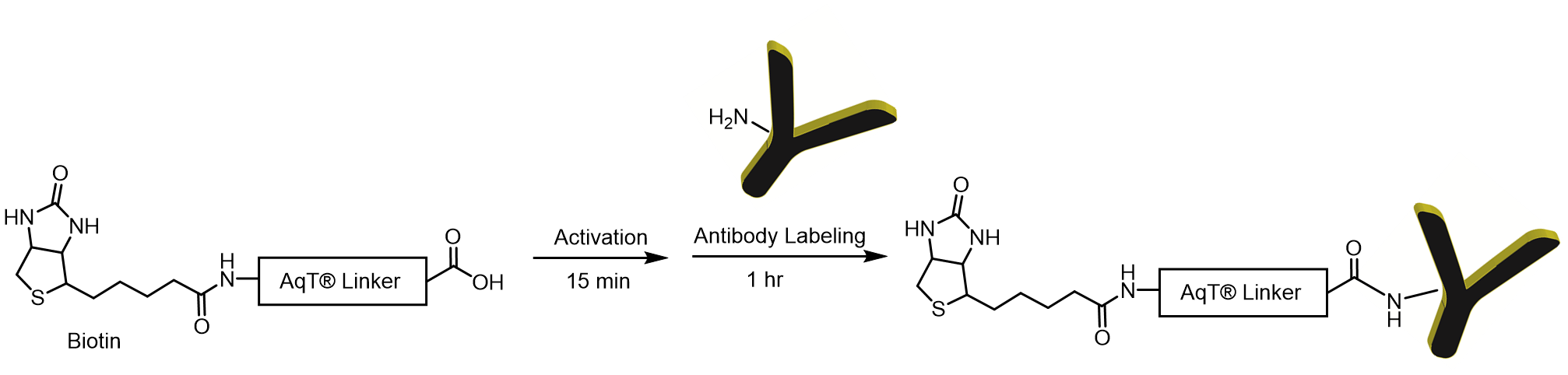
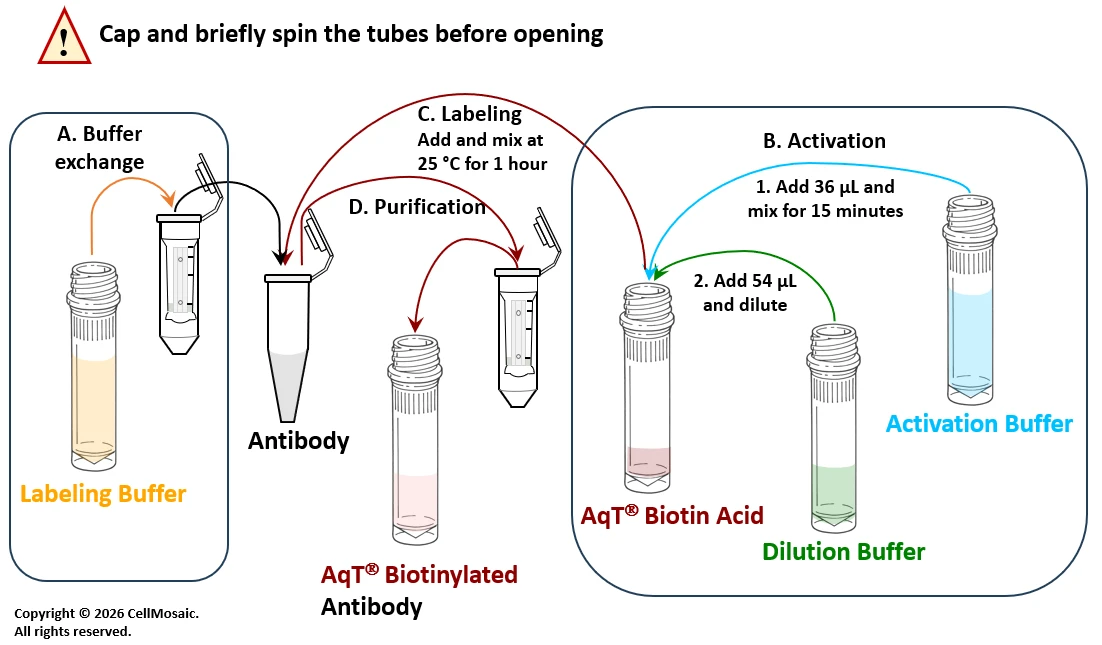
This kit is designed to biotinylate antibodies using AqT® Biotin Acid via surface amines on the antibody; the user supplies the antibody. The kit includes AqT® Biotin Acid, which is activated within 15 minutes and then coupled directly to the antibody in a single step. The labeled product is subsequently purified to remove any unreacted AqT® Biotin Acid. A quick 10-minute biotin assay (reagent and protocol) is also included to determine the biotinylation level immediately after labeling.
The kit is available in multiple configurations for labeling antibodies (0.1-3 mg) with either one (x1) or three (x3) antibody samples.
| Catalog Number | Number of Reactions per Kit | Antibody Amount per Reaction |
|---|---|---|
| CM86144.01x1 | 1 | 100 µg (0.667 nmol for IgG) |
| CM86144.01x3 | 3 | |
| CM86144.1x1 | 1 | 0.1–1 mg (0.667–6.67 nmol for IgG) |
| CM86144.1x3 | 3 | |
| CM86144x1 | 1 | 1–3 mg (6.67–20 nmol for IgG) |
| CM86144x3 | 3 |
If you have any other customization needs, please provide the details above.
Requirement for Antibody
- MW: ≥ 100 KDa (if MW is lower, please use an alternative kit)
- Preferably >90% pure by gel electrophoresis
- Total amount: 0.1-3 mg of protein content as measured by UV.
CM86144 and Its Biotinylated Product Compared to Other Commercial Antibody Biotinylation Kits
| Category | Feature | AqT® Biotin Labeling Kit | Other Commercial Kits |
|---|---|---|---|
| Biotinylated Product Features | Properties | Retains antibody properties • No significant change in hydrophobicity • No significant increase in apparent MW or hydrodynamic volume • No significant increase in aggregation • Minimal heterogeneity after labeling |
May alter antibody properties • Increased hydrophobicity and nonspecific interactions • Increased apparent MW or hydrodynamic volume • Increased risk of aggregation • Highly heterogeneous products |
| Stability | Stable even at high biotin loading Can be stored frozen or lyophilized without stabilizers |
Decreased stability High biotin loading may cause aggregation and precipitation |
|
| Kit Features | Reagent | Advanced AqT® linker technology Proprietary super-hydrophilic, water-soluble, charge-neutral linker-modified biotin |
Zero-length biotin or biotin with hydrophobic ethylene glycol- or polyethylene glycol-type linkers |
| Reagent Stability | Stable formulation • Activated immediately before labeling for improved storage stability • Minimizes hydrolysis-related degradation |
Conventional NHS-based formulation • Typically supplied as preactivated biotin NHS esters • NHS esters are susceptible to hydrolysis during storage, reducing effective reactivity over time |
|
| Biotinylation Level | Predictable and consistent • Tunable loading from low to very high, depending on application needs • Typical loading of 6–8 biotin molecules per IgG |
Often less predictable • Typically targets lower loading to avoid aggregation and may be difficult to tune • Variability may occur if NHS ester content decreases during storage |
|
| Usability | Easy to use • Single-step labeling • Less than 1 hour of hands-on time, or approximately 30 minutes without purification |
Some kits use rapid chemistries, such as EDC-mediated coupling, which may crosslink antibodies and produce large aggregates | |
| Purification Method and Components | Included Purified product is free of unreacted AqT® biotin |
Varies by vendor; often not included | |
| Biotin Assay | Included Reagents and a 10-minute biotin assay protocol |
Typically not included |
Applications and Advantageous of Highly Loaded AqT® Biotinylated Antibodies
- Immunoassays (ELISA): Used as detection antibodies in sandwich ELISA; high biotin loading enhances signal amplification via streptavidin conjugates, while hydrophilicity reduces nonspecific binding and background.
- Flow Cytometry: Enables flexible labeling with streptavidin fluorophores; high biotin density increases signal intensity, and hydrophilicity minimizes aggregation while preserving binding activity.
- Immunohistochemistry (IHC) / Immunocytochemistry (ICC): Compatible with ABC systems; high labeling improves detection of low-abundance targets, and hydrophilicity enhances tissue penetration and staining uniformity.
- Western Blotting: Provides sensitive detection with streptavidin-based reporters; high biotinylation improves signal strength without compromising specificity.
- Immunoprecipitation (IP) / Pull-Down Assays: High biotin loading improves capture efficiency on streptavidin beads; strong binding ensures reliable isolation, while hydrophilicity reduces nonspecific interactions.
- Biosensor and Surface Immobilization (e.g., SPR, BLI): Enables stable, oriented immobilization; high biotin density increases binding capacity and sensitivity, and hydrophilicity improves surface accessibility and reproducibility.
- Cell Isolation and Magnetic Separation: Supports efficient cell capture with streptavidin beads; high labeling improves capture efficiency, while reduced aggregation enhances cell viability and recovery.
Labeling Chemistry
Protocol
Schematic workflow diagram for preparing AqT® biotinylated antibody within 2 hours, starting with 3 mg of IgG. (Reagent volume will vary if the amount of IgG is less than 3 mg).
Example Data
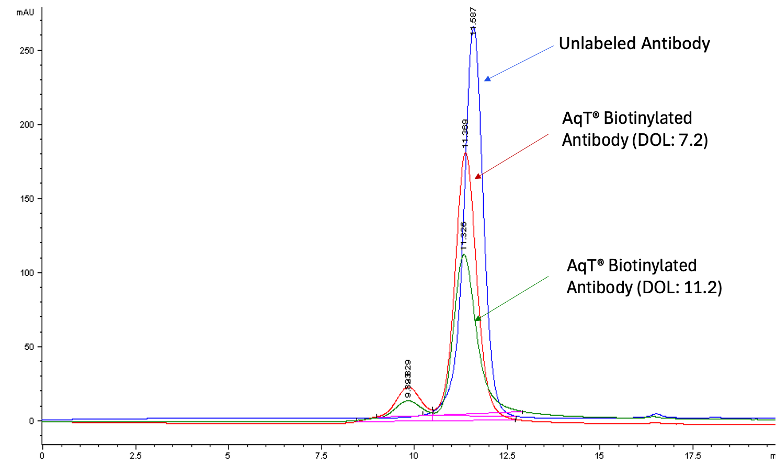
The figures below show several examples of AqT® biotinylated antibodies (human IgG1) compared with conventionally biotinylated antibodies. The extent of labeling and the heterogeneity of the labeled antibodies were assessed by hydrophobic interaction chromatography (HIC)-HPLC (Figure 1 & 2). Apparent molecular weight and aggregation were evaluated by size-exclusion chromatography (SEC)-HPLC (Figure 3 & 4).
Figure 1: Comparison of the hydrophilicity and heterogeneity of AqT® biotin–labeled antibodies versus conventionally biotinylated antibodies (HIC-HPLC profile). Conventionally biotinylated antibodies are highly heterogeneous and show an ~1.5-minute increase in retention time. In contrast, AqT® biotinylated antibodies show only a slight increase in hydrophobicity (~0.15 minutes). Even at high labeling levels, additional biotinylation does not further increase hydrophobicity. AqT® biotinylated antibodies also exhibit minimal heterogeneity, with only a slight increase in peak width compared with the unlabeled antibody.
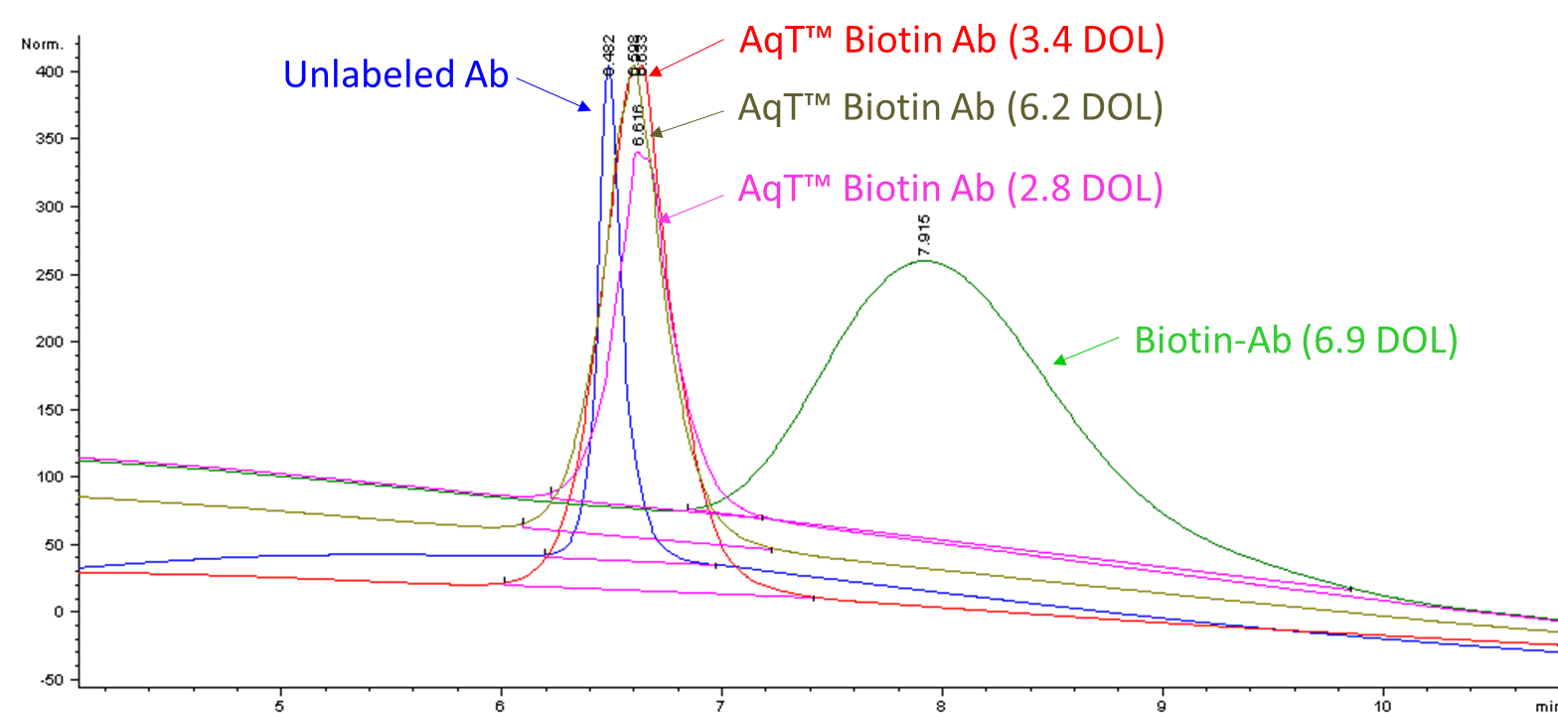
Figure 2: In another example, highly loaded AqT® biotinylated antibodies (DOLs of 7.2 and 11.2) were analyzed by HIC-HPLC. Extremely highly biotinylated antibodies shows a shift in peak position toward the hydrophilic region.
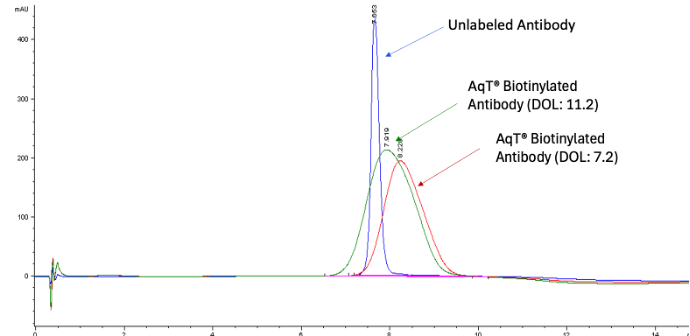
Figure 3: Comparison of the apparent molecular weight (hydrodynamic volume) of AqT® biotin–labeled antibodies versus conventionally biotinylated antibodies (SEC-HPLC profile). Conventionally biotinylated antibodies often show a noticeable increase in apparent molecular weight due to an increased hydrodynamic volume driven by the hydrophobicity of the label. In contrast, AqT® biotinylated antibodies show little to no shift in apparent molecular weight and maintain a hydrodynamic volume similar to the native antibody.
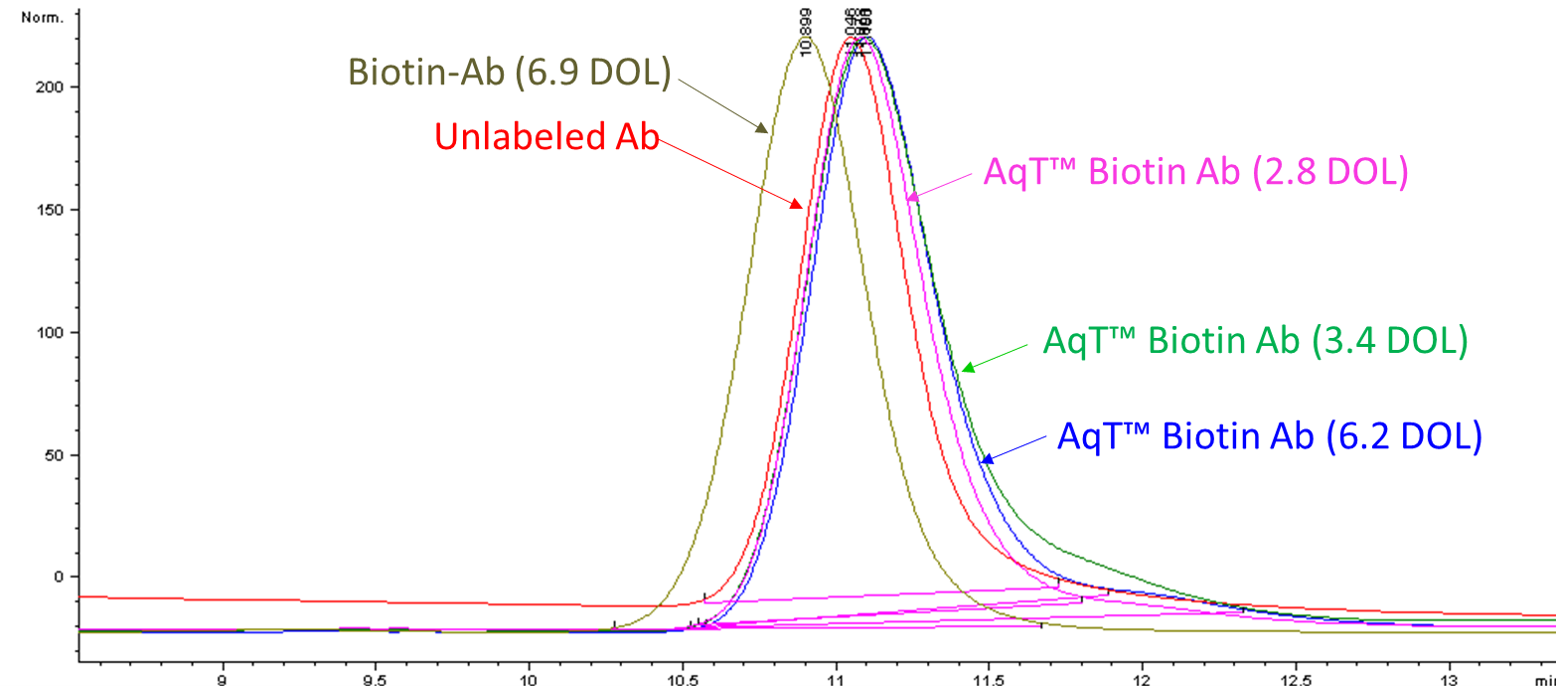
Figure 4: In another example, highly loaded AqT® biotinylated antibodies (DOLs of 7.2 and 11.2) were analyzed by SEC-HPLC. Even at extremely high labeling levels, AqT® biotinylation introduces only a small percentage of aggregates
Frequently Asked Questions:
If you can’t find the answer you’re looking for or need information on general topics, please visit the main Frequently Asked Questions (FAQs) section.
Other Details
The information in this document is subject to change without notice. CellMosaic® assumes no responsibility for any errors or omissions that may appear in this document. Under no circumstances shall CellMosaic be liable, whether in contract, tort, warranty, or under any statute or on other legal theory, for special, incidental, indirect, punitive, multiple, or consequential damages related to or arising from this document, including but not limited to the use of this product thereof.CellMosaic’s products, including but not limited to AqT®, NeIon™, oxLink™ and sxLink™ (collectively, the “Products”), are covered by, or are the subject of, one or more issued patents and pending patent applications, including without limitation: 9,688,663 B2; 8,907,079 B2; 9,511,150 B2; 9,907,854 B2; 9,346,833 B2; 9,518,067 B2; CN104066451B; CN107043339B; CA 2,841,313; EP 2734238 B1; AU2012284055; JP 6240599 B2; and corresponding foreign patents and patent applications. The purchase of the Product conveys solely a limited, non-exclusive, non-transferable, non-sublicensable license to use the Product only for the purchaser’s internal research and development purposes. No right or license is granted, either expressly or by implication, estoppel, or otherwise, under any patent, trademark, copyright, or other intellectual property right of CellMosaic, except as expressly stated herein. Any commercial use of the Product is strictly prohibited without a separate written agreement from CellMosaic. Prohibited commercial uses include, without limitation: (a) the sale, lease, licensing, distribution, or other transfer of the Product or any materials derived from or produced using the Product; (b) the sale, lease, licensing, or other grant of rights to use the Product or any materials derived from or produced using the Product; and (c) the use of the Product to perform services for a fee or other consideration for third parties, including without limitation contract research, screening services, or diagnostic or therapeutic applications. For information regarding commercial licensing or collaboration, please contact us at info@cellmosaic.com.





