Product Description
| Download Documents | |
|---|---|
| Product Sheet | |
| SDS | COA (Lot S660.S11.0428F) |
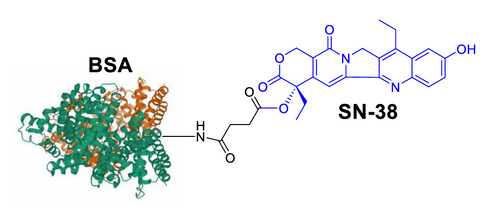
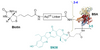
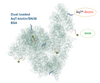
AqT® Biotin-BSA-SN38 Conjugate is a novel dual-labeled BSA conjugate developed with CellMosaic's proprietary AqueaTether® (AqT®) linker technology, delivering enhanced assay performance.
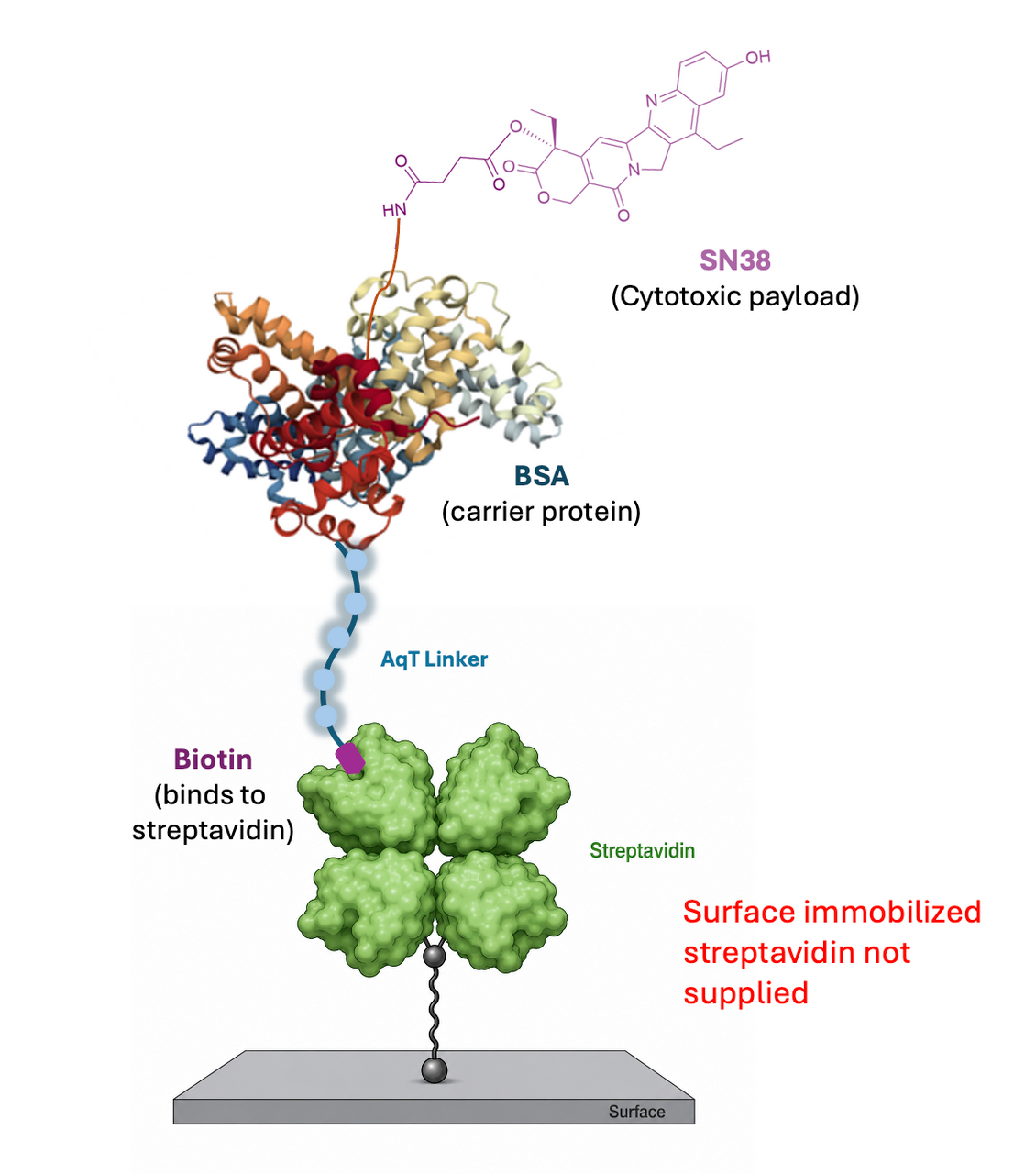
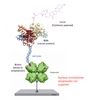
Drug–BSA conjugates are widely used in immunoassays, including bead-based assays, ELISA, and biosensor platforms such as SPR and BLI. In these applications, BSA serves as a carrier protein that facilitates the presentation of small-molecule drugs on assay surfaces. However, conventional drug–BSA conjugates typically rely on passive adsorption to plastic, glass, or bead surfaces, which can result in random orientation, variable surface density, and reduced assay reproducibility. By incorporating biotin into the drug–BSA conjugate, these limitations can be overcome through specific and controlled immobilization on streptavidin-coated surfaces. In this format, biotin acts as a molecular anchor, enabling robust, reproducible attachment of the drug–BSA conjugate while preserving accessibility of the drug moieties for target binding.
Furthermore, this conjugate can function as a modular drug delivery platform in which the targeting component can be swapped without resynthesizing the drug conjugate. This enables selective targeting and killing of cells that bind biotin-containing constructs. The system can also be used to evaluate albumin-mediated tumor accumulation, payload release kinetics, and the biodistribution of protein–drug conjugates.
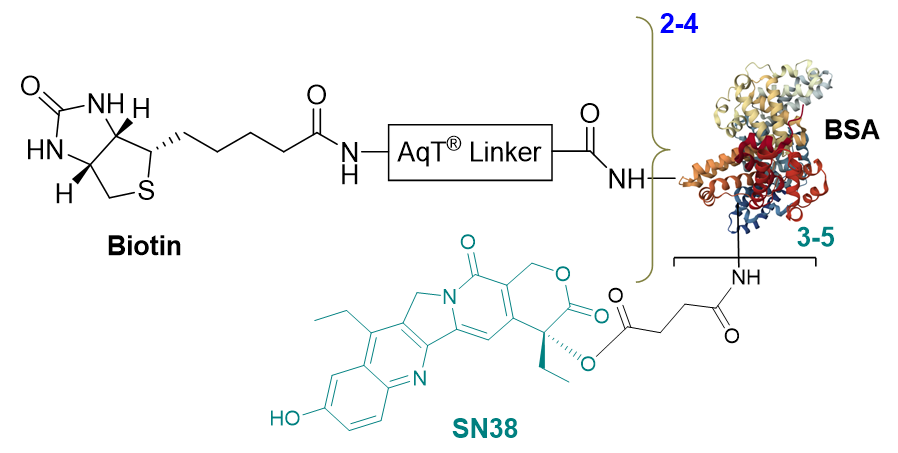
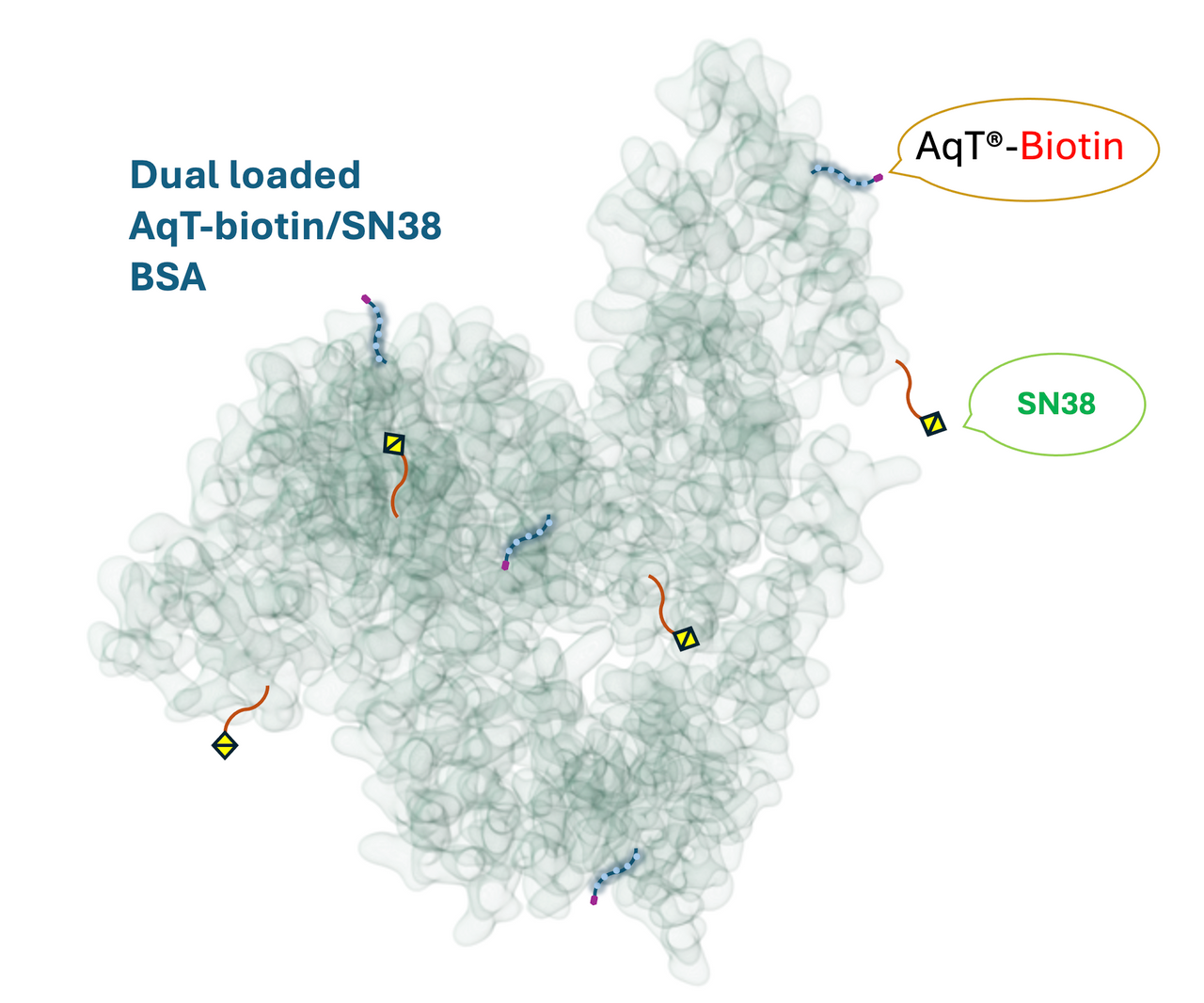
CellMosaic's proprietary AqT® super-hydrophilic linker technology addresses these challenges by enhancing aqueous solubility and minimizing aggregation. This Biotinylated BSA–SN38 conjugate incorporates AqT® linkers to improve conjugate stability, reduce nonspecific interactions, and maintain excellent assay performance. The conjugate is engineered with an optimized drug-to-protein ratio (DPR) of approximately 3–5 SN38 molecules per BSA and a biotin loading of approximately 2–4 biotin molecules per BSA, enabling efficient immobilization on streptavidin-coated surfaces. The hydrophilic AqT® linker helps minimize aggregation, reduce background signal, and improve assay robustness and reproducibility.
This product is sold as 1 tube each of 100µg (CM86158-500UG) and 500 µg (CM86158-500UG). For bulk quantities and custom packaging requirements, please contact us for pricing and availability.
For a detailed description of the AqT® technologies, please see our technology section.
Key Features
- Lyophilized powder; ready for use after reconstitution with water. No additional buffer is required.
- Dual-functional conjugate containing an average of 2–4 Biotin molecules per BSA, enabling convenient immobilization on streptavidin-coated surfaces and compatibility with streptavidin-based detection systems. Optimal SN38 Loading with an average of 3–5 SN38 molecules per BSA.
- SN38 incorporation levels accurately determined by UV/HPLC and MS analysis; biotin incorporation levels determined by biotin assay.
- Advanced AqT® linker technology: Utilizes CellMosaic’s proprietary, super-hydrophilic, water-soluble, charge-neutral AqT® linker to enhance aqueous solubility and minimize aggregation.
General Applications of Dual-Labeled AqT® Biotin-BSA-SN38 Conjugate
ELISA, IHC, and ICC Assay Development: Detect and characterize anti-drug antibodies, drug-binding proteins, drug-binding receptors, and drug-specific monoclonal antibodies using streptavidin-coated surfaces.
Flow Cytometry Assays: Analyze anti-drug antibodies, drug-binding proteins, and drug-binding receptors using streptavidin-conjugated fluorophores.
Immunoprecipitation and Pull-Down Studies: Capture and enrich anti-drug antibodies, drug-binding proteins, and drug-binding receptors using streptavidin-coated beads.
SPR and BLI Binding Studies: Immobilize the conjugate on streptavidin-coated sensor surfaces for binding and kinetic studies.
Magnetic Bead–Based Assays: Capture, enrich, and isolate drug-binding proteins and antibodies using streptavidin-coated magnetic beads.
Microarrays and Multiplex Assays: Immobilize the conjugate on streptavidin-coated surfaces for high-throughput screening and multiplexed assay formats.
Streptavidin-Based Targeting Platform: A modular drug delivery system where the targeting component can be swapped without resynthesizing the drug conjugate. Screening different targeting ligands, preclinical targeting studies, cell-specific cytotoxicity assays.
Cell Ablation Reagent: The conjugate could be used to selectively kill cells that bind biotin-containing constructs. Examples: Engineered cells expressing avidin/streptavidin, cells decorated with streptavidin antibodies.
Pharmacokinetic and Albumin Delivery Research: Albumin-mediated tumor accumulation, payload release kinetics, biodistribution of protein-drug conjugates.
Specifications
- Physical Appearance: white to off-white preservative-free lyophilized powder in a 2.0 mL centrifuge tube.
- Storage Temp: –20°C or below.
- Purity: ≥99% of conjugates by HPLC.
- Amount of Biotin Loaded per BSA Molecule: 2–4 (refer COA of each lot for actual value).
- Amount of SN38 Loaded per BSA Molecule: 3–5 (refer COA of each lot for actual value).
Characterization of AqT® Biotin-BSA-MMAE Product by HPLC
Lot Number: S660.S11.0428F (SN38 Loading: 3.7 by SEC/UV ratio; Biotin Loading: 2.3 by Biotin Assay)
Figure 1. Overlay Reversed-phase HPLC spectrum of BSA (before labeling, green trace), BSA-SN38 (after SN38 labeling, red trace), and AqT® Biotin-BSA-SN38 (after AqT® biotinylation, blue trace).
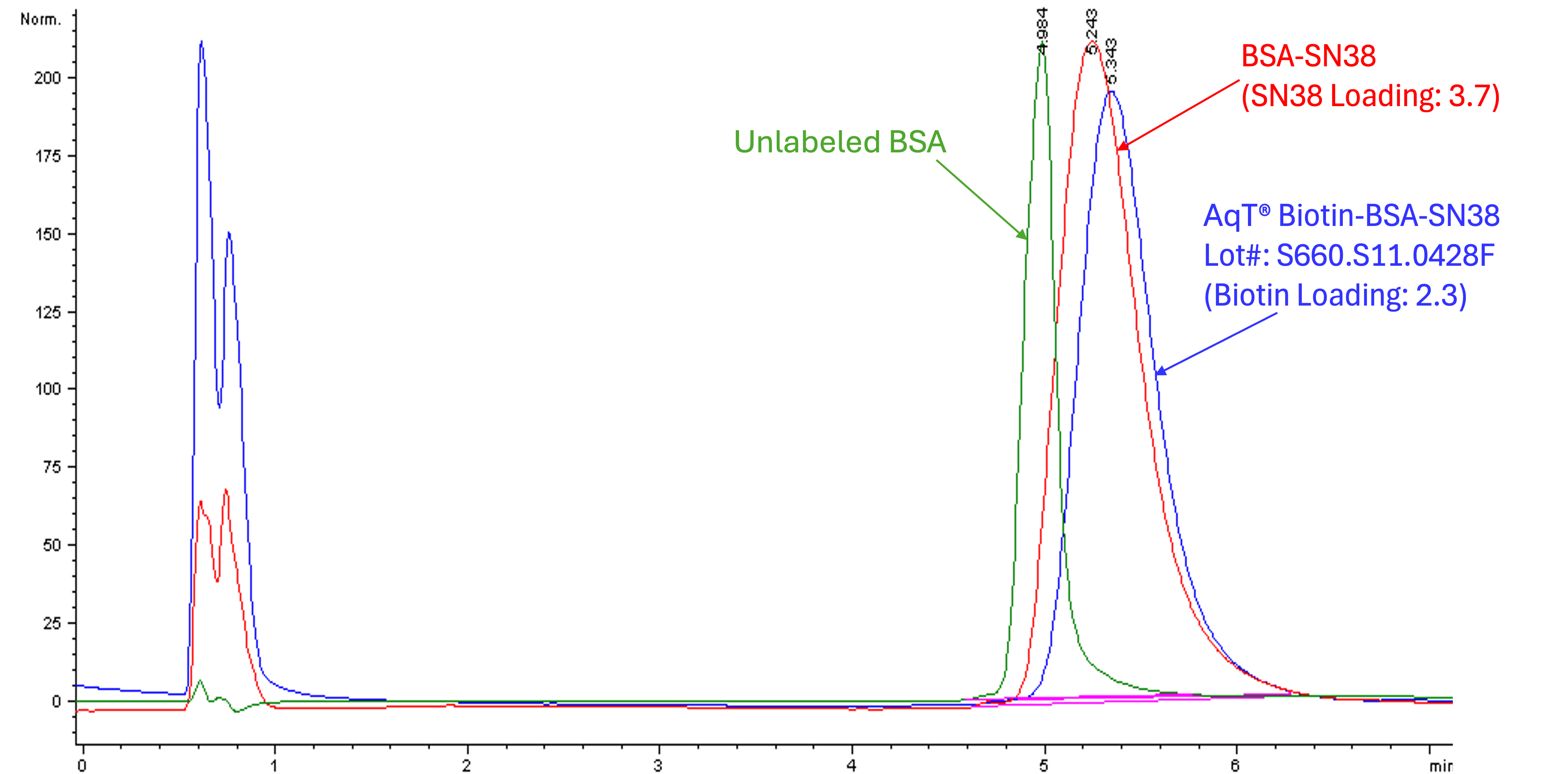
The hydrophilic AqT® linker largely preserves the retention time of the dual-labeled BSA conjugate, keeping it close to that of the BSA-SN38 conjugate (delta Rt: 0.1 min) while exhibiting minimal peak broadening, indicative of greater conjugate homogeneity.
In contrast, BSA conjugated with 4.4 SN38 molecules (starting material for AqT® biotinylation) using the conventional linker exhibited a substantially longer retention time (delta Rt: 0.27 min) and significant peak broadening (T1/2: ~1 min).
Note: For biopolymers labeled with very hydrophobic small molecules, reversed phase HPLC can also be used to assess the extent of the labeling.
Figure 2. Overlay SEC HPLC spectrum of BSA (before labeling, green trace), BSA-SN38 (after SN38 labeling, red trace), and AqT® Biotin-BSA-SN38 (after AqT® biotinylation, blue trace).
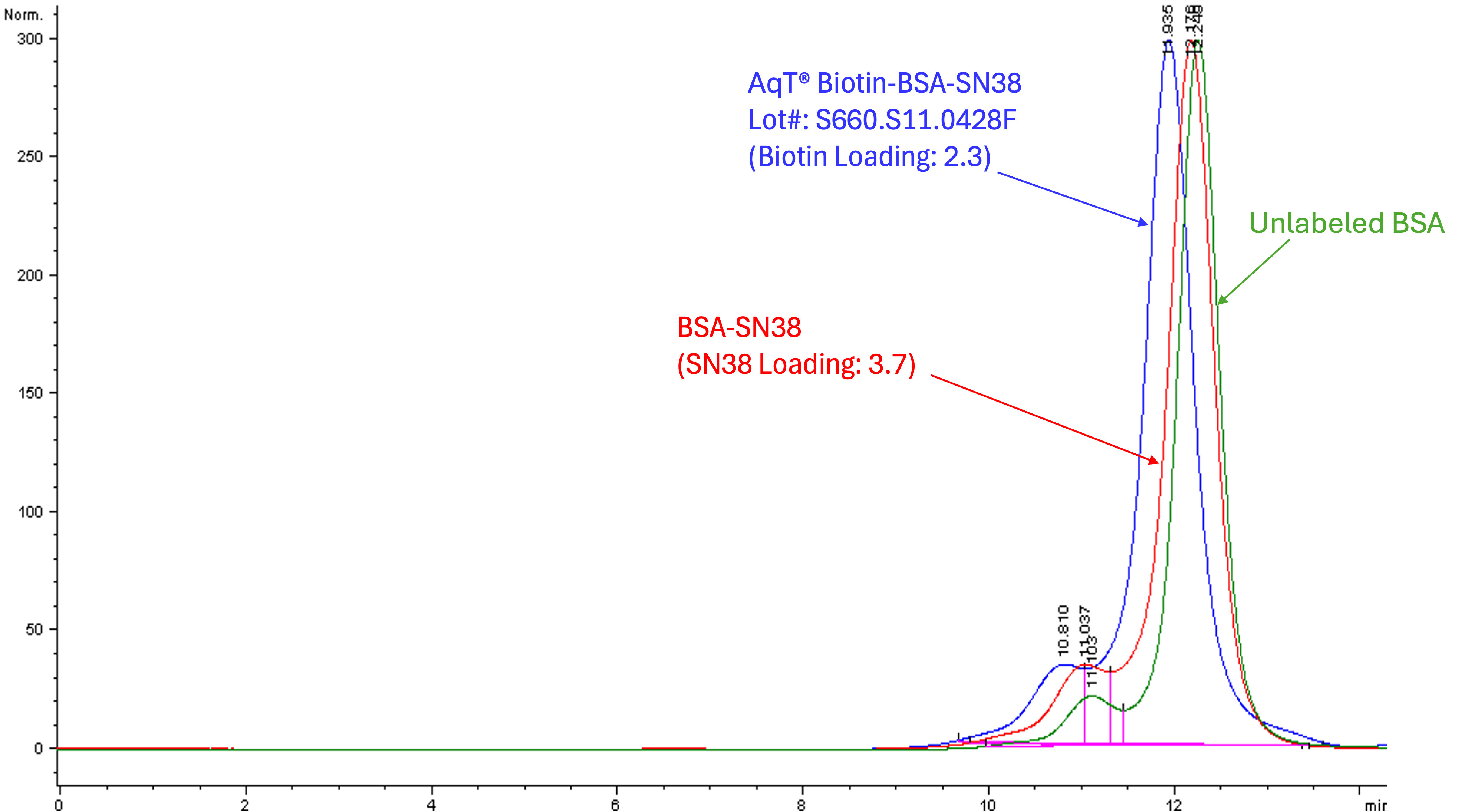
AqT® biotinylation of BSA-SN38 to an average DOL of 2.3 causes some increase in apparent molecular weight and hydrodynamic volume. While native BSA contains approximately 8.6% aggregates, SN38 labeling resulted in an additional 3.8% aggregate formation. No additional aggregation is observed after labeling. This confirms that AqT® labeling largely maintains protein properties.
These data highlight the ability of the AqT® linker technology to support dual protein labeling while preserving favorable biophysical properties.
Note: SEC separates the conjugates by apparent MW or size in aqueous solution. In general, higher-MW species elute earlier. SEC is also a useful tool for assessing the level of aggregation in a biopolymer. By comparing the SEC profiles of an unlabeled protein and labeled protein, you can estimate the extent of aggregation in the labeled protein.
Frequently Asked Questions:
If you can’t find the answer you’re looking for or need information on general topics, please visit the main Frequently Asked Questions (FAQs) section.
Other Details
The information in this document is subject to change without notice. CellMosaic® assumes no responsibility for any errors or omissions that may appear in this document. Under no circumstances shall CellMosaic be liable, whether in contract, tort, warranty, or under any statute or on other legal theory, for special, incidental, indirect, punitive, multiple, or consequential damages related to or arising from this document, including but not limited to the use of this product thereof.CellMosaic’s products, including but not limited to AqT®, NeIon™, oxLink™ and sxLink™ (collectively, the “Products”), are covered by, or are the subject of, one or more issued patents and pending patent applications, including without limitation: 9,688,663 B2; 8,907,079 B2; 9,511,150 B2; 9,907,854 B2; 9,346,833 B2; 9,518,067 B2; CN104066451B; CN107043339B; CA 2,841,313; EP 2734238 B1; AU2012284055; JP 6240599 B2; and corresponding foreign patents and patent applications. The purchase of the Product conveys solely a limited, non-exclusive, non-transferable, non-sublicensable license to use the Product only for the purchaser’s internal research and development purposes. No right or license is granted, either expressly or by implication, estoppel, or otherwise, under any patent, trademark, copyright, or other intellectual property right of CellMosaic, except as expressly stated herein. Any commercial use of the Product is strictly prohibited without a separate written agreement from CellMosaic. Prohibited commercial uses include, without limitation: (a) the sale, lease, licensing, distribution, or other transfer of the Product or any materials derived from or produced using the Product; (b) the sale, lease, licensing, or other grant of rights to use the Product or any materials derived from or produced using the Product; and (c) the use of the Product to perform services for a fee or other consideration for third parties, including without limitation contract research, screening services, or diagnostic or therapeutic applications. For information regarding commercial licensing or collaboration, please contact us at info@cellmosaic.com.