
Small Molecule Activation
Activation of a small molecule is often an intermediate step required before it can be coupled to a biopolymer. Some small molecules are commercially available in an activated form. For non-activated compounds, CellMosaic can either convert the molecule into an activated intermediate or perform the conjugation directly using appropriate coupling reagents.
These activation processes are used exclusively to support our custom Biopolymer Labeling and Biopolymer Conjugation services.
Example 1. Preparation of an NHS Ester from a Carboxylic Acid
Carboxylic acid-containing compounds can be activated as N-hydroxysuccinimide (NHS) esters for subsequent reaction with primary amines on proteins and other biopolymers.
In this example, the carboxylic acid is activated in situ using dicyclohexylcarbodiimide (DCC) and N-hydroxysuccinimide (NHS). After removal of the insoluble by-product dicyclohexylurea (DCU) by filtration, the resulting NHS ester is used directly for biopolymer labeling or conjugation.
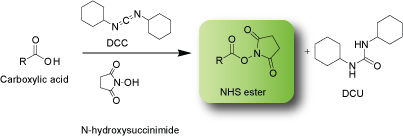
Scheme 1. Formation of an NHS ester by DCC-mediated coupling.
References
- Sheehan, J. C.; Hess, G. P. A new method of forming peptide bonds. J. Am. Chem. Soc. 1955, 77, 1067–1068.
- Staros, J. V.; Lee, W. T.; Conrad, D. H. Membrane-impermeant cross-linking reagents: application to the study of the cell surface receptor for IgE. Methods Enzymol. 1987, 150, 503–512.
- Anjaneyulu, P. S.; Staros, J. V. Reactions of N-hydroxysulfosuccinimide active esters. Int. J. Pept. Protein Res. 1987, 30(1), 117–124.